Making Sense of Panic
An online CBT course for panic attacks with Dr Elaine Ryan
Understand what happens during panic, learn what to do when it starts and work on the fear that can begin to affect the rest of your life.
Twenty short lessons, guided practices and a workbook to help you put what you learn into everyday situations, at your own pace.
Look inside the course
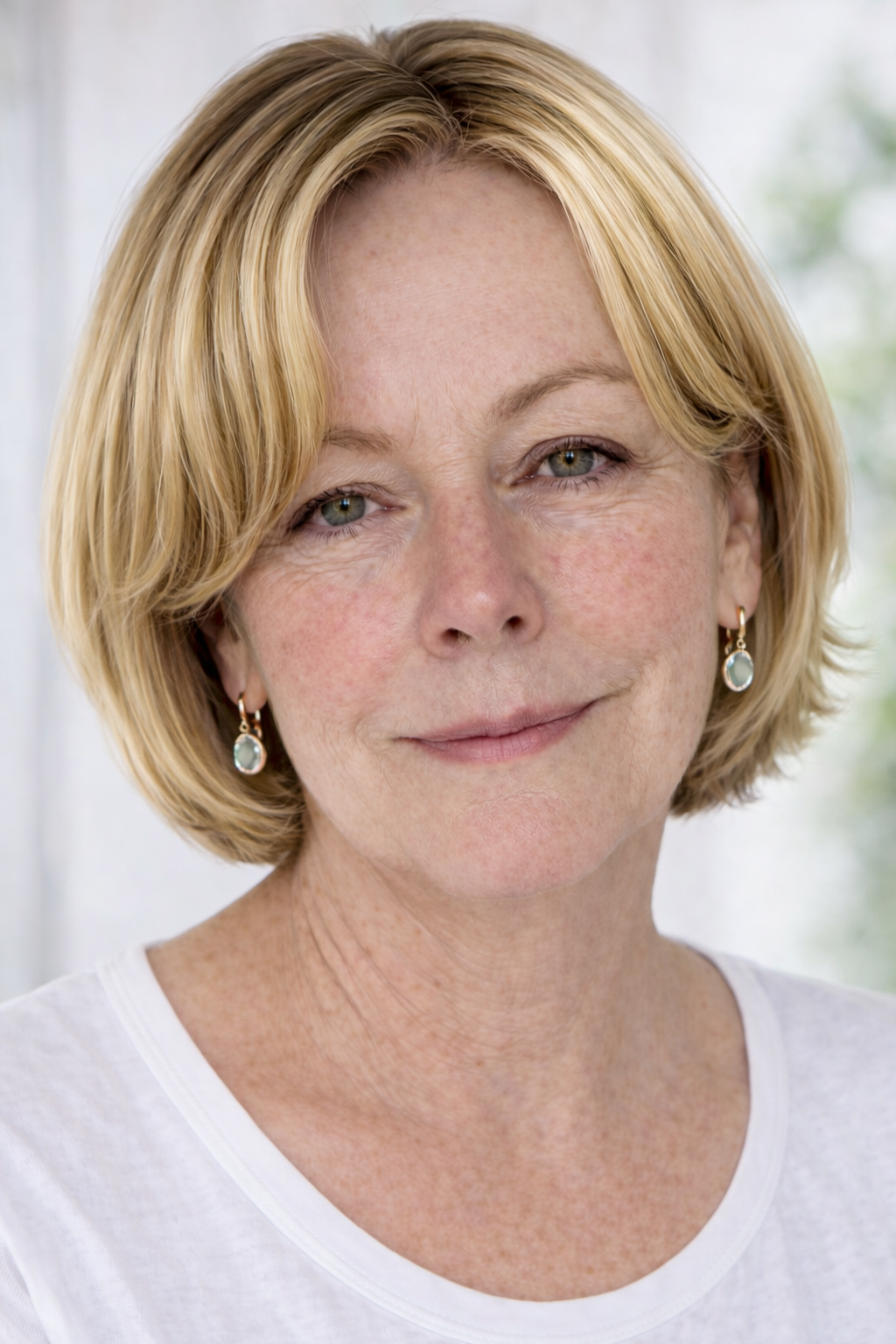
Dr Elaine Ryan
I am Dr Elaine Ryan, a psychologist, and I have experienced panic attacks myself.
My panic attacks first started while I was working in the National Health Service. I have had them at work and in the middle of a presentation during an interview for a new job. I had a dry mouth and was hyperventilating. I carried on, but it was extraordinarily difficult.
I am telling you this because I do know what it feels like. Panic can be hard to describe to someone who has only seen how you look from the outside. You may appear to be getting on with things while feeling frightened and struggling inside.
In this course, I bring together my work as a psychologist and an understanding of how panic can affect everyday life. I explain the ideas clearly, show you what they look like in practice and give you space to work out how they apply to you.
Curriculum
I designed the course to cover the following broad areas:
- The Physiology of Panic. Understand the "fight or flight" response as a biological false alarm.
- Cognitive Restructuring. Learn to identify and interrupt the "catastrophic thoughts" that fuel the loop.
- Immediate De-escalation. Grounding and distraction techniques as well as guided relaxation.
-
Systematic Exposure. A guided path to safely re-engaging with the places and activities you’ve been avoiding.
- Lesson 10 — Bring attention back to your day (2:59)
- Lesson 11 — The habits that bring relief but keep fear going (2:54)
- Lesson 12 — Look more carefully at a frightening prediction (3:45)
- Lesson 13 — Try one small experiment with me (4:10)
- Lesson 14 — Become less afraid of bodily sensations (4:37)
- Lesson 15 — Return to places and activities you avoid (4:14)
What I will help you understand
We begin with what happens in your body during panic and why the sensations can feel so frightening. You will learn to separate a sensation from the outcome you fear, so that you can be clearer about the problem you are trying to work on.
We then look at your own panic pattern: what you notice, what you think it means and what you do next. That includes the checking, reassurance and avoidance that can bring relief at the time but leave you just as frightened of the next attack.
From there, I take you through practical ways to respond during familiar panic, examine a frightening prediction and return to activities that have become difficult. Later lessons cover worrying about the next attack, difficult days and keeping changes going.
How CBT is used in the course
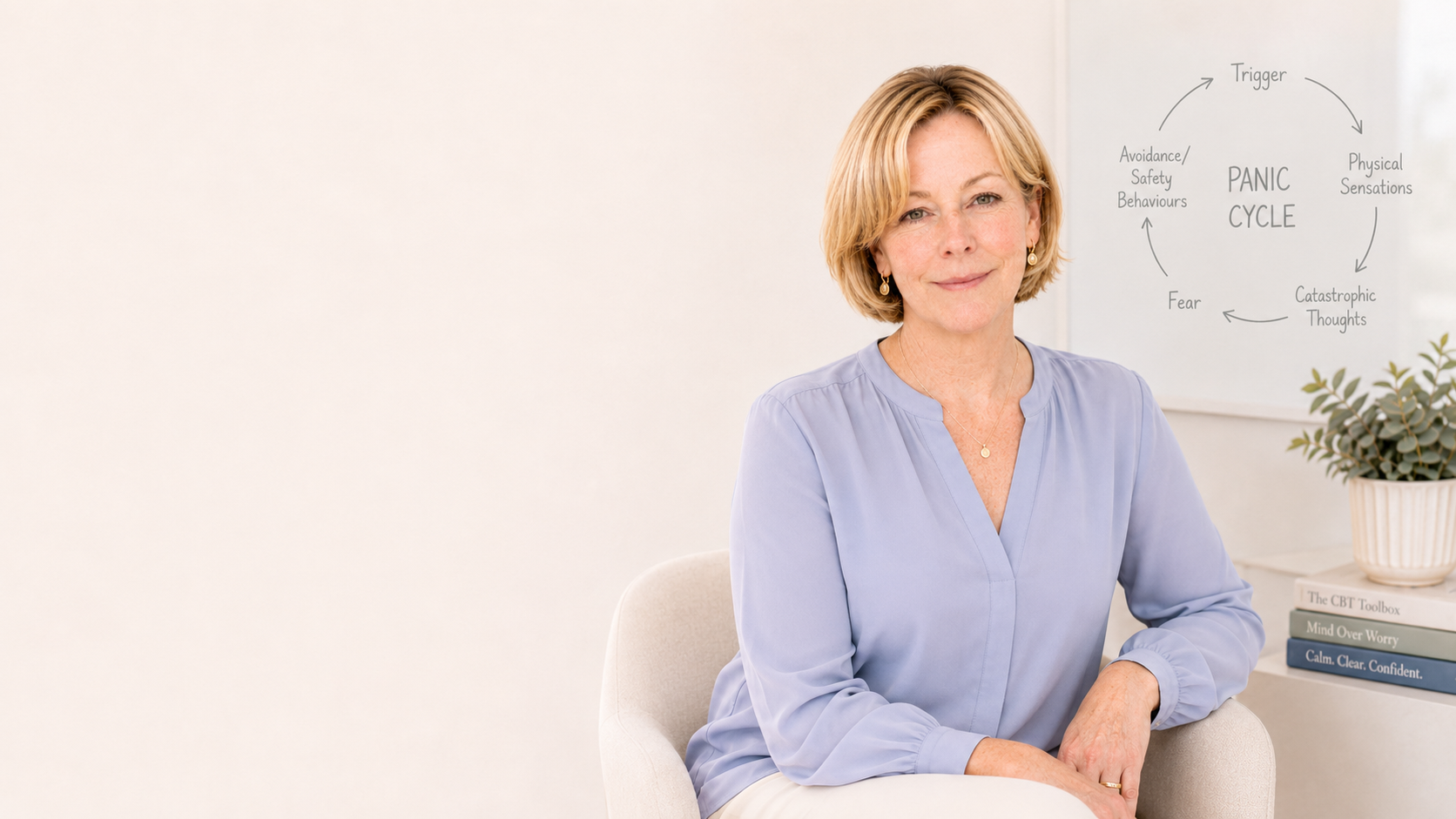
CBT stands for cognitive behavioural therapy. In this course, it means looking carefully at the connections between physical sensations, thoughts, attention and actions, then trying small changes to see what you learn.
For example, someone may feel lightheaded in a meeting and think, “If I speak, I will faint.” We look at that exact fear, plan an appropriate experiment and review what actually happened. If the feared sensation did not occur, we acknowledge that instead of pretending the whole prediction was tested.
You will see fictional examples throughout the course, followed by space to work through your own experience. The emphasis is on understanding your particular fear and choosing practice that is suitable for you.
What is included
- 20 short video lessons in five sections, with about 70 minutes of video in total.
- Two guided practices covering comfortable breathing, getting your bearings and releasing tension.
- A 66-page fillable workbook, with explanations, examples and space to plan and review your practice.
- A separate lesson and practice PDF for every lesson, if you prefer to work with one part at a time.
- Written transcripts and video captions to support watching, reading and revisiting the material.
- A short panic response card that you can personalise in Lesson 7.
Feedback from users who have taken the course
I take the making of the courses very seriously and collect feedback. The latest feedback on this course for panic attacks is
- 79% of people have taking the course said that it helped them with panic attacks, and
- 97% would recommend a course to other people with panic.
I was terrified of the next attack. This course gave me a 'toolkit' that actually works in the moment.
Before this course, I hadn't stepped foot in a supermarket for six months without a panic attack. Last week, I did my full weekly shop alone using the grounding techniques. It felt like getting my life back.
The explanation of the 'False Alarm' response was the turning point for me. Once I understood what my body was doing biologically, the physical sensations lost their power to terrify me. I finally felt in control.
I was skeptical that an online program could help where years of therapy hadn't, but the structure of this course is different. It’s practical, logical, and gave me a specific toolkit I actually use.