Relationship OCD
A self-paced course with 26 video lessons, practical examples and a printable, fillable workbook.
Understand the OCD cycle, learn CBT and exposure and response prevention skills, and practise
making more room for the life you want to live.
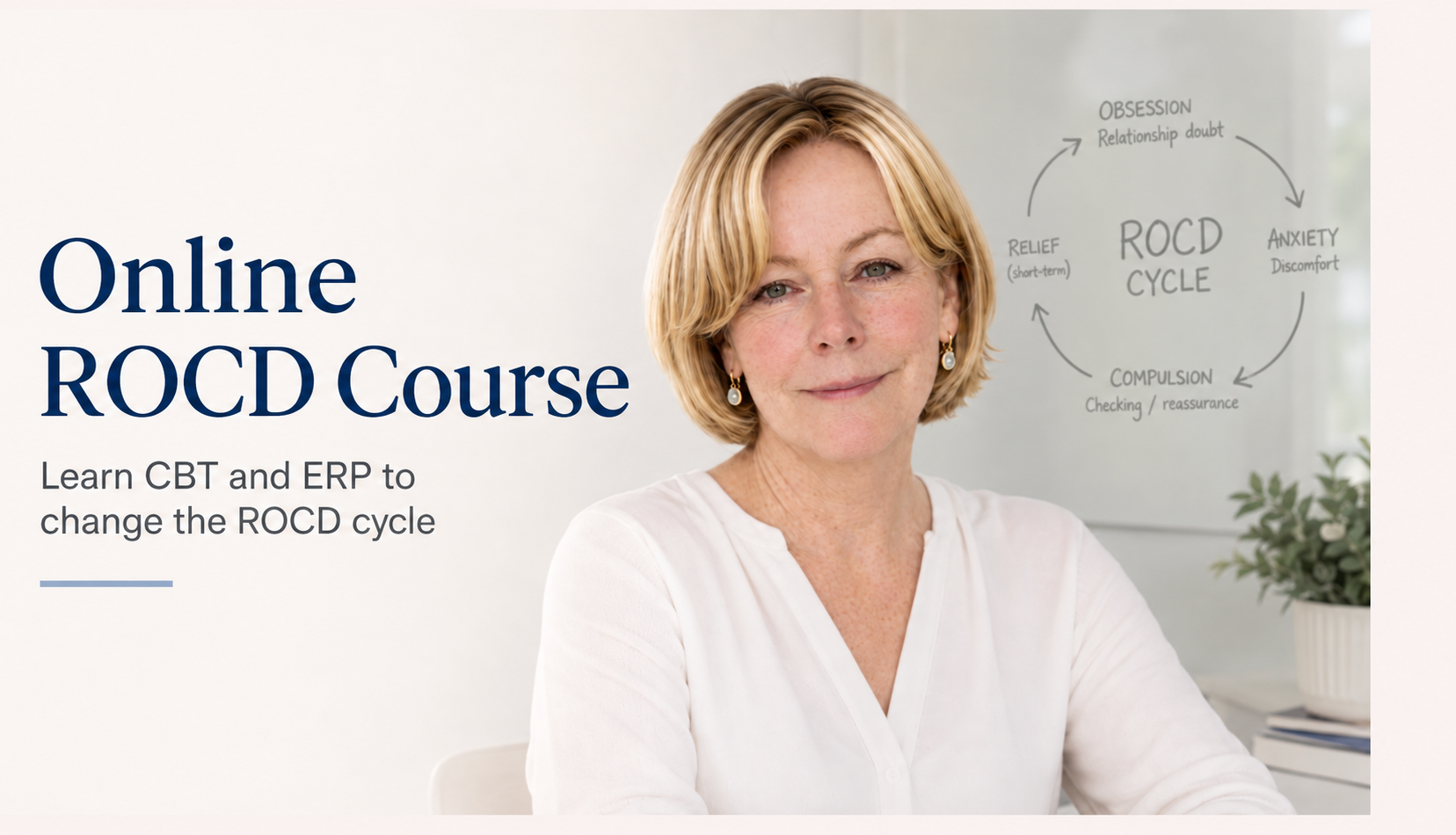
Relationship OCD describes obsessive-compulsive difficulties focused on relationships.
The important thing to understand is the pattern: a doubt arrives, you feel pressure to resolve it, and checking or reassurance offers relief that does not last.
This course helps you recognise that pattern and practise a different response.
Look inside the course
Curriculum
Understanding ROCD
The obsessions and compulsions

Dr Elaine Ryan
I’m Elaine Ryan, a doctor of psychology with 20 years of experience. I created this course to explain the work carefully, in the way I would introduce it in a session: first helping you understand what is happening, then showing you a manageable skill to practise.
We follow fictional examples throughout the course. You will see how Ruth responds to feeling checks, how Niamh gets caught in checking attraction, and how Daniel works with feared possibilities. Their experiences make the skills concrete, so you can work out what an appropriate version might look like in your own day.
Each lesson gives you a practice to consider and an optional learning check. You can pause, return to an explanation and use the workbook at a pace that fits your life.
What you will learn
- Recognise the cycle. Notice the links between a trigger, the meaning you give it, the urge to check and the temporary relief that keeps the pattern going.
- Identify the less obvious compulsions. Recognise mental reviewing, feeling checks, comparisons, reassurance seeking and repeated confession.
- Understand the rules that create pressure. Explore expectations such as needing to feel certain, attracted or connected all the time.
- Adjust when practice becomes difficult. Make a step smaller, recognise hidden rituals and review what you actually did without turning the review into another test.
- Use the skills in everyday relationship situations. Work through examples involving attraction, commitment, guilt, closeness and partner support.
- Make room for genuine concerns and your own choices. Learn to distinguish a repeated searchfor certainty from practical concerns that deserve attention.
- Keep going after a setback. Build a continuing plan that allows for imperfect practice.
How CBT and ERP fit together
Cognitive behavioural therapy, or CBT, helps you understand how interpretations, feelings and responses interact.
Exposure and response prevention, or ERP, is a central CBT approach used for OCD: you practise allowing a manageable trigger or uncertainty to be present while leaving out the compulsive response.
For example, Ruth wants to have breakfast with Tom. An urge arrives to check old photographs to see whether she felt happier before. Her practice is to leave the photograph app closed and return to the conversation, allowing the doubt to remain unanswered.
Success is the response she practises; it does not depend on producing a particular feeling about Tom.
The course explains how to choose and review your own steps. Practices are voluntary and respect consent, privacy and actual safety.
ERP is never a reason to tolerate abuse, cross a personal boundary or force intimacy.
What is included
- 26 teaching videos, with around two hours of explanations, progressive graphics and worked examples.
- A 19-page printable and fillable workbook with nine practical tools and worked examples.
- A suggested practice and optional learning check for every lesson.
- Guidance for adapting practice, responding to setbacks and continuing independently.
A course you can work through in stages
Lessons 1–8: Understand what keeps the pattern going. Begin with your own goals, the OCD cycle,hidden checking, reassurance and beliefs about love.
Lessons 9–14: Learn to practise. Choose a manageable step, plan response prevention, follow aworked practice, explore imaginal practice and adjust when you get stuck.
Lessons 15–22: Apply the skills to relationship situations. Work through feelings, attraction,comparison, commitment, guilt, closeness, partner support and genuine relationship concerns.
Lessons 23–26: Bring the skills into your life. Return attention to meaningful activities, use thecourse without making it another check, respond to setbacks and make a continuing plan.
Questions you may have
Will this tell me whether my relationship is right
The course does not give a verdict about your relationship. It helps you work on repeated checking and the demand for certainty, while leaving room for your own values, boundaries and decisions.
How quickly should I finish
Begin with the early lessons in order and leave room to try the skills. Watching every video quickly is different from practising a new response in daily life. There is no pass mark and no need to complete the workbook perfectly.
Who is the course for
It is an adult self-help course for people who recognise recurring relationship doubts and repetitive responses such as checking, mental reviewing or reassurance seeking. It provides education and structured practice, without individual assessment or monitoring. It does not diagnose OCD or provide urgent support.